Generational Values: Driving American Consumer Trends 2026

Understanding the generational values consumer trends in America for 2026 reveals distinct priorities among Gen Z, Millennials, and Gen X, fundamentally reshaping market strategies and product development across various sectors.
As we approach 2026, navigating the complex landscape of American consumer behavior requires a deep dive into the underlying forces that shape purchasing decisions. Among these, generational values consumer trends stand out as paramount. Each generation, forged by unique historical contexts and technological advancements, approaches consumption with a distinct set of beliefs and priorities. For businesses and marketers, grasping these nuanced values is not just beneficial; it’s essential for relevance and sustained growth in a rapidly evolving market.
Gen Z: authenticity, social impact, and digital fluency
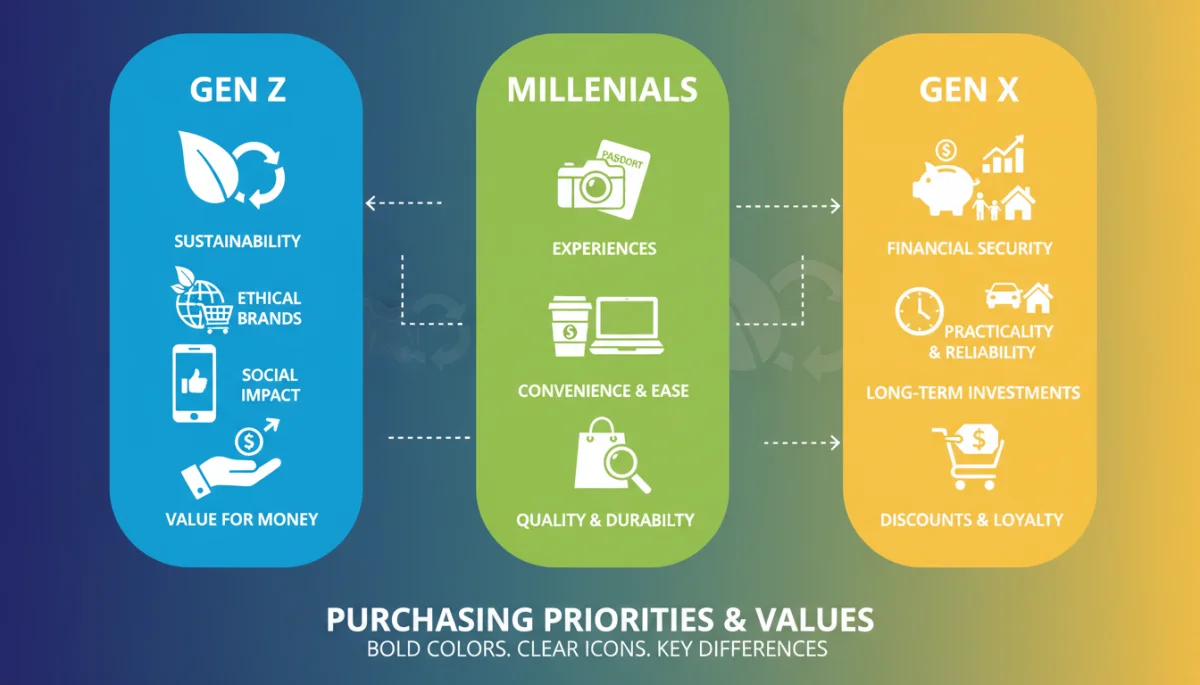
Gen Z, born roughly between the mid-1990s and early 2010s, represents the first truly digital native generation. Their values are deeply intertwined with their constant connectivity, fostering an acute awareness of global issues and a demand for authenticity. This cohort’s consumer trends are heavily influenced by a desire for transparency, ethical practices, and brands that genuinely reflect their progressive ideals.
This generation prioritizes experiences over possessions, often seeking out brands that offer personalized interactions and align with their social and environmental concerns. Their purchasing power, though still growing, already significantly impacts various industries, from fashion to technology.
the quest for authenticity and transparency
Gen Z consumers are highly skeptical of traditional advertising and marketing ploys. They value authenticity above all else, gravitating towards brands that are genuine, transparent about their operations, and demonstrate a clear purpose beyond profit. This translates into a preference for:
- Brands with strong ethical sourcing and labor practices.
- Companies that actively engage in social and environmental causes.
- Influencer marketing that feels organic and relatable, not overtly commercial.
Their digital fluency means they are adept at researching products and brands, quickly uncovering any discrepancies between a brand’s stated values and its actual practices. This makes genuine storytelling and transparent communication non-negotiable for capturing their loyalty.
social impact as a purchasing driver
For Gen Z, consumption is often an extension of their identity and values. They are more likely to support brands that contribute positively to society or the environment. This isn’t merely a preference; it’s often a prerequisite for a brand to even enter their consideration set. They seek out companies that:
- Champion diversity, equity, and inclusion.
- Implement sustainable business models and reduce their carbon footprint.
- Take clear stances on social issues important to their demographic.
This generational value drives a significant portion of their consumer trends, forcing brands to re-evaluate their corporate social responsibility initiatives and integrate them authentically into their core business model.
In essence, Gen Z’s consumer behavior is a reflection of their values: a demand for authenticity, a commitment to social and environmental responsibility, and a natural comfort with digital interactions. Brands that fail to acknowledge and adapt to these core tenets risk becoming irrelevant to this powerful demographic.
Millennials: experience, convenience, and purpose-driven consumption
Millennials, born between the early 1980s and mid-1990s, are now in their prime earning and spending years. This generation has witnessed significant technological shifts, transitioning from an analog to a digital world, which has profoundly shaped their values. Their consumer trends are characterized by a strong emphasis on experiences, a demand for convenience, and a growing inclination towards purpose-driven brands that resonate with their personal values.
Often burdened by student debt and rising living costs, Millennials are judicious spenders, but they are willing to invest in products and services that offer significant value, convenience, or a memorable experience. They are also highly influenced by peer reviews and social media trends.
the pursuit of experiences over possessions
Unlike previous generations, many Millennials prioritize collecting experiences rather than accumulating material goods. This value manifests in various consumer trends, from travel and dining to entertainment and personal development. They are keen on:
- Unique travel opportunities and cultural immersion.
- Dining out and exploring diverse culinary experiences.
- Investing in fitness classes, workshops, and skill-building activities.
Brands that can offer or facilitate these experiences, or even weave an experiential narrative into their product offerings, tend to capture the Millennial market more effectively. This shift has fueled the growth of the experience economy.
convenience as a premium offering
Having grown up with the internet and the advent of smartphones, Millennials expect convenience in nearly every aspect of their consumer journey. Time is a precious commodity, and any service or product that saves them time or effort is highly valued. This translates to a strong preference for:
- Online shopping with fast and reliable delivery options.
- Subscription services for everything from groceries to entertainment.
- Seamless digital payment methods and mobile-first experiences.
Businesses that streamline their processes and offer frictionless experiences are more likely to win and retain Millennial customers. The rise of on-demand services is a direct response to this generational demand for ultimate convenience.
purpose and ethical alignment
Similar to Gen Z, but perhaps with a different emphasis, Millennials are increasingly drawn to purpose-driven brands. They seek out companies that demonstrate social responsibility and align with their personal values, though their focus might lean more towards sustainable practices and community involvement rather than direct activism. They are interested in:
- Brands with transparent supply chains and fair trade practices.
- Companies that contribute to local communities or invest in environmental initiatives.
- Products that are sustainable, organic, or locally sourced.
Millennials use their purchasing power to support brands that reflect their worldview, making ethical considerations a significant factor in their consumer decisions. Understanding this blend of experience, convenience, and purpose is key to engaging this economically powerful generation.
Gen X: practicality, value, and brand loyalty
Generation X, typically born between the mid-1960s and early 1980s, often finds itself overshadowed by the larger Millennial and Boomer generations. However, Gen X represents a significant and stable economic force with distinct values that drive their consumer trends. Known for their independent and pragmatic nature, Gen X consumers prioritize practicality, value for money, and tend to exhibit strong brand loyalty once trust is established.
This generation is often in their peak earning years, juggling careers and family responsibilities, which makes efficiency and reliability paramount. They are comfortable with technology but do not necessarily seek out the newest trends purely for the sake of innovation.
the emphasis on practicality and reliability
Gen X consumers are pragmatic decision-makers. They are less swayed by fleeting trends and more focused on the utility, durability, and effectiveness of a product or service. Their purchasing decisions are often rooted in a cost-benefit analysis, seeking solutions that simplify their lives and offer lasting value. This translates into a preference for:
- High-quality products that are built to last.
- Services that are dependable and efficient.
- Investments that offer tangible returns or long-term benefits.
Marketers aiming to reach Gen X should highlight product features, reliability, and how a product can solve a practical problem or improve their daily routine.
seeking true value for money
While not necessarily budget shoppers, Gen X consumers are acutely aware of value. They are willing to pay for quality, but they expect that quality to justify the price. They are adept at comparing options and are not easily persuaded by hype. Their search for value manifests in:
- Researching products thoroughly before making a purchase.
- Looking for deals, discounts, and loyalty programs that offer real savings.
- Prioritizing functionality and performance over superficial aesthetics.
Brands that can clearly articulate the value proposition of their products, demonstrating how they provide lasting benefits or superior performance, are more likely to resonate with Gen X. They appreciate transparency in pricing and a clear understanding of what they are getting for their money.
cultivating strong brand loyalty
Once Gen X consumers find brands they trust and that consistently deliver on their promises, they tend to become fiercely loyal. This loyalty is earned through consistent quality, reliable service, and a positive customer experience. They are less likely to switch brands impulsively. Factors contributing to their loyalty include:
- Consistent product performance and quality.
- Excellent customer service and support.
- Brands that understand and cater to their specific needs without being overly trendy.
Building long-term relationships with Gen X requires a focus on reliability and customer satisfaction. Their loyalty, once secured, can be a valuable asset for any business seeking stable consumer bases. In summary, Gen X’s consumer trends are driven by a practical mindset, a keen eye for value, and a preference for established, trustworthy brands.
intersection of generational values in 2026
While each generation exhibits distinct values and consumer trends, it’s crucial to recognize that these cohorts do not exist in isolation. In 2026, the American marketplace is a dynamic ecosystem where these generational values often intersect, creating both challenges and opportunities for businesses. Understanding these points of convergence and divergence is paramount for developing comprehensive and effective market strategies.
The digital realm, for instance, serves as a common ground, though each generation engages with it differently. Gen Z and Millennials are digital natives, while Gen X has adapted. Similarly, all generations show some level of concern for ethical consumption, albeit with varying degrees of emphasis and specific causes.
digital engagement across generations
The internet and social media are universal platforms, yet their use varies significantly. Gen Z uses social media for discovery and community, expecting interactive and authentic content. Millennials leverage it for peer reviews, recommendations, and curated lifestyle content. Gen X, while present, often uses digital channels for research, convenience, and direct communication with brands, valuing efficiency over constant engagement.
This means a multi-channel digital strategy is essential, tailoring content and engagement methods to each generation’s preferred interaction style. A one-size-fits-all approach will fall short.
evolving ethical consumption
Ethical consumption is no longer a niche concern; it’s a growing expectation across all generations, though its definition and importance shift. Gen Z demands radical transparency and social justice alignment. Millennials lean towards sustainability and community impact. Gen X, while practical, appreciates brands that demonstrate corporate responsibility, especially if it aligns with quality and value.
Brands must communicate their ethical commitments clearly and authentically, understanding that a generic statement will not satisfy the discerning consumer, regardless of age. Tailoring the narrative to resonate with each generation’s specific ethical priorities is key.
The intersection of these generational values creates a complex consumer landscape. Businesses that can skillfully navigate these differences, finding common ground while respecting distinct preferences, will be best positioned for success in 2026. This requires flexibility, deep market research, and a willingness to adapt.
adapting marketing strategies for each generation
Given the distinct generational values and consumer trends, a generalized marketing approach in 2026 is unlikely to yield optimal results. Instead, successful brands will employ tailored strategies that speak directly to the core motivations and preferred communication channels of each demographic. This involves more than just age-targeting; it requires a nuanced understanding of their worldviews and how they engage with brands.
Developing specific messaging, choosing appropriate platforms, and even designing products with particular generational values in mind can significantly boost effectiveness. The goal is to build genuine connections, not just push products.
tailoring messaging for resonance
Effective marketing begins with messaging that resonates. For Gen Z, this means authentic, purpose-driven narratives delivered via short-form video and social media. For Millennials, it’s about showcasing experiences, convenience, and how a product aligns with their values, often through peer reviews and aspirational content.
Gen X responds best to straightforward, benefit-oriented messaging that highlights practicality, reliability, and value, often through traditional media, email marketing, or direct communication. Each message must be crafted to speak their language and address their primary concerns.
platform selection and content formats
The choice of marketing platform and content format is as crucial as the message itself. Gen Z thrives on TikTok, Instagram Reels, and YouTube, preferring visual, interactive, and user-generated content. Millennials are active on Instagram, Facebook, and Pinterest, engaging with blogs, podcasts, and visually appealing lifestyle content.
Gen X often utilizes Facebook, email, and traditional search engines for information, preferring detailed articles, transparent reviews, and clear product specifications. Optimizing content for each platform and format ensures maximum reach and engagement within each target group.
Adapting marketing strategies to align with generational values is not merely about reaching different age groups; it’s about understanding their unique cultural codes and motivations. By customizing messaging, platforms, and content, businesses can forge stronger, more meaningful connections, driving engagement and loyalty across the diverse American consumer landscape in 2026.
future outlook: evolving values and market dynamics
Looking beyond 2026, the landscape of American consumer trends will continue to evolve, driven by shifting generational values and emerging societal changes. The interplay between Gen Z, Millennials, and Gen X will remain a critical factor, but new influences, such as technological advancements, global events, and economic shifts, will also shape future consumption patterns. Businesses must adopt a proactive and agile approach to stay ahead of these changes, constantly re-evaluating their strategies.
The next wave of consumers, Alpha, is already showing early signs of unique behaviors that will further challenge existing marketing paradigms. Continuous research and adaptation will be key to long-term success.
technological impact on future values
Technological innovation will undoubtedly continue to influence generational values. The rapid advancement of AI, virtual reality, and personalized digital experiences will shape how future generations perceive value, convenience, and authenticity. For instance, the rise of the metaverse could create entirely new avenues for consumption and brand interaction, requiring a redefinition of what ‘experience’ means.
Brands need to monitor these technological shifts and anticipate how they will alter consumer expectations and priorities, ensuring their offerings remain relevant in an increasingly tech-driven world.
societal shifts and their influence
Beyond technology, broader societal shifts—such as climate change concerns, economic instability, and evolving social justice movements—will continue to mold generational values. These external pressures can accelerate or alter existing consumer trends, leading to new demands for sustainable products, ethical business practices, and brands that actively contribute to solving global challenges.
Companies that demonstrate foresight and integrate these societal concerns into their core operations, rather than treating them as mere marketing ploys, will build stronger, more resilient relationships with consumers across all age groups.
The future of American consumer trends is an ever-moving target, but by keenly observing evolving generational values and anticipating the impact of technological and societal shifts, businesses can position themselves for continued relevance and growth. Agility, empathy, and a commitment to genuine value will be the hallmarks of successful brands in the years to come.
| Generation | Key Consumer Value |
|---|---|
| Gen Z | Authenticity, social impact, digital fluency. |
| Millennials | Experience, convenience, purpose-driven. |
| Gen X | Practicality, value for money, brand loyalty. |
| Overall Trend | Increasing demand for ethical and personalized consumption. |
Frequently asked questions about generational consumer trends
Gen Z primarily values authenticity, social impact, and digital fluency. They seek transparent brands, ethical practices, and engaging, personalized digital experiences. Their purchasing decisions are often influenced by a brand’s commitment to social and environmental causes.
Millennials prioritize experiences, convenience, and purpose-driven consumption, often investing in travel and seamless digital services. Gen X, conversely, focuses on practicality, value for money, and established brand loyalty, preferring reliable products and services that simplify their lives.
Understanding generational values is crucial because it allows businesses to tailor marketing strategies, product development, and customer experiences to specific demographics. This leads to more effective engagement, increased brand loyalty, and sustained growth in a competitive market by addressing distinct consumer motivations.
Technology profoundly shapes these trends by influencing communication, purchasing methods, and value perception. Digital natives like Gen Z expect seamless online interactions, while older generations leverage technology for convenience and research. AI and VR will further redefine experiences and consumer expectations.
Brands can market effectively by employing a multi-channel strategy, customizing messaging for each generation’s preferred platforms and values. This involves creating authentic, purpose-driven content for Gen Z, experiential and convenient offerings for Millennials, and practical, value-oriented communications for Gen X.
conclusion
The American consumer landscape in 2026 is a rich tapestry woven from the distinct generational values of Gen Z, Millennials, and Gen X. Each cohort, shaped by unique life experiences and technological exposure, approaches consumption with different priorities—whether it’s Gen Z’s demand for authenticity and social impact, Millennials’ quest for experiences and convenience, or Gen X’s focus on practicality and value. For businesses, recognizing and adapting to these nuanced generational values is not merely a strategic advantage but a fundamental requirement for success. By crafting tailored marketing messages, utilizing appropriate platforms, and developing products that resonate with these core beliefs, brands can build stronger connections and navigate the evolving market dynamics effectively. The future belongs to those who understand that consumption is increasingly an expression of identity and values.
