Federal Budget Debate 2027: Priorities & $1.5 Trillion Deficit

The federal budget debate for fiscal year 2027 centers on balancing crucial spending priorities with a projected $1.5 trillion deficit, influencing economic stability and future policy directions.
The upcoming federal budget debate for fiscal year 2027 is poised to be a pivotal discussion, shaping the nation’s financial landscape for years to come. With a projected deficit of $1.5 trillion, policymakers face daunting choices regarding key spending priorities and fiscal responsibility, directly impacting every American.
Understanding the Looming $1.5 Trillion Deficit
The projected $1.5 trillion deficit for fiscal year 2027 is a stark figure that demands careful examination. This shortfall represents the gap between the federal government’s anticipated revenues and its planned expenditures, signaling potential long-term economic challenges if not addressed strategically. Understanding its origins and implications is crucial for informed public discourse.
Drivers of the Deficit
Several factors contribute to the escalating national debt and the projected deficit. These often include a combination of sustained spending increases in mandatory programs, coupled with tax policies that may not generate sufficient revenue to cover these outlays. Economic downturns or slow growth also play a significant role by reducing tax receipts.
- Mandatory Spending Growth: Programs like Social Security, Medicare, and Medicaid are legally required to be funded, and their costs are steadily increasing due to an aging population and rising healthcare expenses.
- Discretionary Spending: While theoretically adjustable, discretionary spending—which includes defense, education, and infrastructure—often faces political pressure for increases, further widening the deficit.
- Interest on National Debt: As the national debt grows, so does the interest payment burden, which itself becomes a substantial expenditure category, creating a self-reinforcing cycle.
The implications of such a large deficit are far-reaching. It can lead to higher interest rates, potentially crowding out private investment, and may necessitate future tax increases or spending cuts. The long-term fiscal health of the nation hinges on how this imbalance is managed.
Ultimately, addressing the deficit requires a comprehensive approach that considers both revenue generation and spending control. Without a clear strategy, the economic stability of the United States could face significant headwinds, impacting generations to come.
Key Spending Priorities: Defense and National Security
National security remains a cornerstone of federal spending, consistently representing a substantial portion of the budget. For fiscal year 2027, the allocation to defense and national security programs is expected to be a contentious point, balancing global responsibilities with domestic needs.
Modernizing Military Capabilities
The Department of Defense continually seeks funds for modernizing its equipment, investing in advanced technologies, and maintaining a robust global presence. This includes developing next-generation weaponry, cyber warfare capabilities, and space defense systems. The goal is to ensure the U.S. military retains its technological edge and operational effectiveness against evolving threats.
- Technological Advancements: Funding for AI, quantum computing, and hypersonic weapons is crucial for future defense strategies.
- Personnel and Readiness: Resources are needed to recruit, train, and support military personnel, as well as to maintain high levels of operational readiness for various global contingencies.
- Cybersecurity: Protecting critical infrastructure and government networks from cyberattacks is a growing priority, requiring significant investment in both defensive and offensive capabilities.
While essential for safeguarding national interests, the substantial costs associated with defense spending often draw scrutiny, particularly in the context of a large federal deficit. Debates often revolve around efficiency, potential redundancies, and the balance between military might and other pressing societal needs.
The allocation for defense in the 2027 budget will reflect current geopolitical realities and strategic assessments. It’s a complex decision that weighs immediate security concerns against long-term fiscal sustainability, requiring careful consideration from lawmakers and the public alike.
Healthcare and Social Programs: A Growing Fiscal Challenge
Healthcare and social programs, including Medicare, Medicaid, and Social Security, constitute the largest segment of federal expenditures and are projected to continue growing in fiscal year 2027. These programs are vital safety nets for millions of Americans but also represent significant drivers of the national deficit.
Rising Healthcare Costs
The cost of healthcare in the United States continues to climb, placing immense pressure on federal budgets. Factors such as an aging population, advances in medical technology, and the rising cost of prescription drugs contribute to the escalating expenses of Medicare and Medicaid. Policymakers are constantly searching for ways to control these costs without compromising access or quality of care.
Social Security, designed to provide retirement, disability, and survivor benefits, faces its own set of long-term financial challenges. With more people entering retirement and fewer workers contributing per beneficiary, the system requires ongoing adjustments to ensure its solvency for future generations. These debates often involve sensitive discussions about eligibility ages, benefit levels, and potential revenue enhancements.
The political implications of reforming these programs are immense, as they directly impact a vast segment of the American population. Any proposed changes must navigate complex political landscapes and address the concerns of various stakeholders, from seniors and healthcare providers to taxpayers.
Finding a sustainable path for healthcare and social programs in the 2027 budget is arguably one of the most challenging tasks for legislators. It requires innovative solutions that balance humanitarian concerns with fiscal realities, ensuring these crucial programs remain viable.
Investing in Infrastructure and Education: Future Growth Drivers
Beyond mandatory spending and defense, investments in infrastructure and education are crucial for the nation’s long-term economic competitiveness and societal well-being. These areas often compete for limited discretionary funds but are widely recognized as catalysts for future growth and innovation.
Modernizing American Infrastructure
America’s infrastructure, encompassing roads, bridges, public transit, water systems, and broadband internet, is in dire need of upgrades. Investment in these areas not only creates jobs but also improves efficiency, reduces transportation costs, and enhances overall economic productivity. The 2027 budget debate will likely include proposals for significant allocations to infrastructure projects, aiming to address years of underinvestment.
- Transportation Networks: Funding for repairing and expanding highways, railways, and airports to support commerce and travel.
- Digital Connectivity: Expanding high-speed internet access to underserved rural and urban areas is essential for economic equity and participation in the digital economy.
- Clean Water and Energy: Investments in modernizing water treatment plants and transitioning to renewable energy sources are critical for public health and environmental sustainability.
Similarly, education funding is an investment in human capital. From early childhood education to higher education and workforce training, robust educational systems are vital for developing a skilled workforce and fostering innovation. Debates will focus on how to best allocate resources to improve educational outcomes, reduce student debt, and prepare Americans for the jobs of tomorrow.
The challenge lies in securing adequate funding for these vital sectors amidst intense competition for resources and the pressure of the projected $1.5 trillion deficit. Policymakers must weigh the immediate fiscal constraints against the long-term economic benefits these investments promise.
The Role of Tax Policy in Budgetary Decisions
Tax policy is inextricably linked to the federal budget debate, serving as the primary mechanism for generating revenue to fund government operations. For fiscal year 2027, discussions around tax rates, deductions, and credits will be central to addressing the projected $1.5 trillion deficit and shaping economic incentives.
Balancing Revenue and Economic Growth
Lawmakers face the delicate task of designing tax policies that generate sufficient revenue without stifling economic growth or placing undue burdens on taxpayers. Debates often revolve around the fairness of the tax system, its impact on different income brackets, and its effectiveness in promoting investment and job creation.
Potential areas of discussion might include adjustments to corporate tax rates, individual income tax brackets, or the introduction of new taxes. Each proposal carries its own set of economic and political consequences, making consensus difficult to achieve.
Tax policy also plays a crucial role in influencing consumer behavior and business decisions. Incentives for specific industries or activities can be embedded in the tax code, aiming to stimulate certain sectors of the economy or encourage desired social outcomes. However, these complexities add layers to the budget debate.
Ultimately, the tax decisions made for the 2027 budget will have a profound impact on the federal government’s ability to fund its priorities and manage the national debt. Striking the right balance between revenue generation and economic competitiveness will be a key challenge.
Economic Implications of a $1.5 Trillion Deficit
The projected $1.5 trillion deficit for fiscal year 2027 carries significant economic implications that extend beyond mere numbers. It influences interest rates, inflation, national debt, and the overall stability of the U.S. economy, affecting businesses and households alike.
Impact on Interest Rates and Investment
A persistent large deficit often necessitates increased government borrowing, which can drive up demand for credit and, consequently, raise interest rates. Higher interest rates make it more expensive for businesses to borrow and invest, potentially slowing economic growth and job creation. Consumers also face higher costs for mortgages, car loans, and other forms of credit.
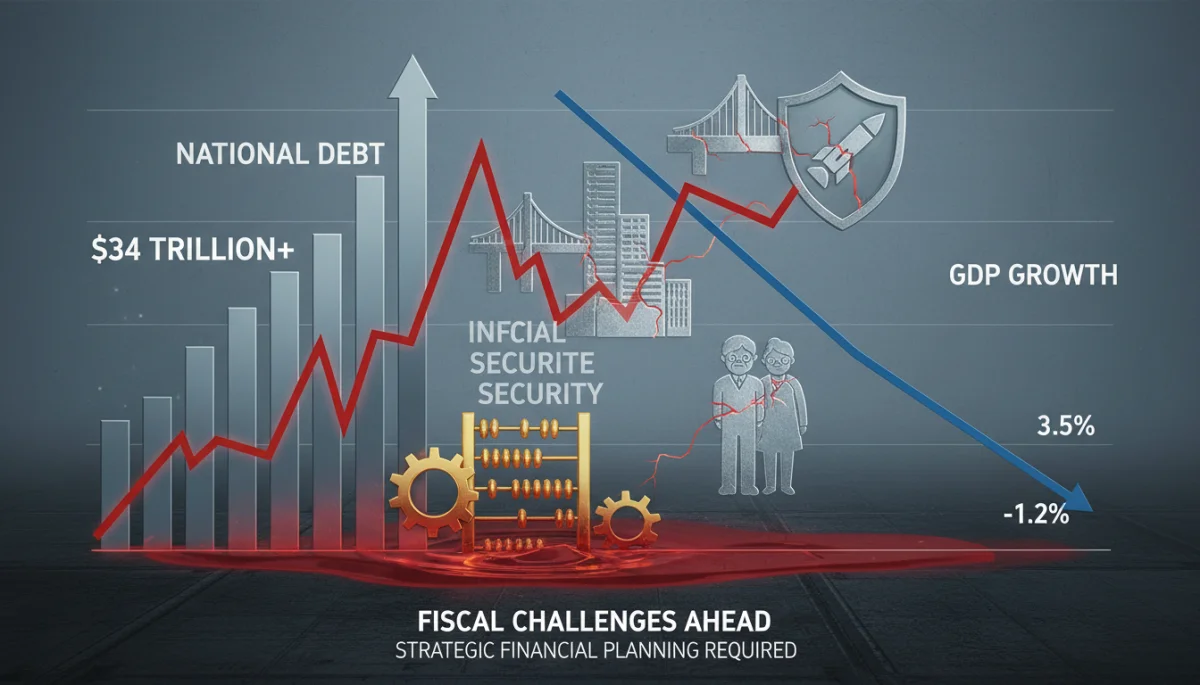
Furthermore, a large deficit can lead to concerns about the long-term fiscal health of the nation, potentially eroding investor confidence. This can make it more challenging for the government to borrow at favorable rates, exacerbating the debt burden. The perception of fiscal instability can also deter foreign investment, impacting the U.S. dollar’s value and trade balances.
The risk of inflation is another concern. If the Federal Reserve is pressured to monetize the debt (effectively printing money to cover government spending), it could lead to an oversupply of money in the economy, driving up prices. This would erode the purchasing power of consumers and create economic instability.
Addressing the deficit is not merely an accounting exercise; it is fundamental to maintaining economic stability and ensuring future prosperity. The choices made in the 2027 budget debate will have lasting consequences for the U.S. economy and its global standing.
Navigating the Political Landscape of Budgetary Compromise
The federal budget debate is inherently a political process, fraught with competing interests, ideological differences, and the constant need for compromise. For fiscal year 2027, navigating this complex landscape will be crucial to arriving at a budget that can pass through Congress and address the nation’s fiscal challenges.
Challenges in Reaching Consensus
With diverse priorities among political parties and various constituencies, reaching a consensus on spending and revenue is often an arduous task. Each spending category has its advocates and opponents, making it difficult to achieve broad agreement on where to cut or where to invest more. Mandatory spending programs, in particular, are politically sensitive due to their direct impact on large segments of the population.
- Partisan Divides: Deep ideological differences between parties often lead to stalemates, making it hard to find common ground on fiscal policy.
- Constituent Demands: Lawmakers are responsive to the needs and demands of their constituents, which can create pressure to protect certain programs or secure funding for local projects.
- Lobbying Efforts: Various interest groups actively lobby Congress to advocate for their specific spending priorities or tax benefits, further complicating the negotiation process.
The necessity of finding common ground often leads to omnibus spending bills, which combine multiple appropriations measures into one large package. While these can help avoid government shutdowns, they also make it harder for individual lawmakers and the public to scrutinize specific spending decisions.
Effective leadership and a willingness to negotiate are paramount in these debates. The ability of policymakers to bridge divides and prioritize the nation’s long-term fiscal health over short-term political gains will determine the success of the 2027 budget process. Compromise is not just a political tactic; it is often the only path to functional governance.
| Key Aspect | Brief Description |
|---|---|
| Projected Deficit | The federal budget faces a $1.5 trillion deficit for fiscal year 2027, requiring critical financial decisions. |
| Spending Priorities | Key areas include defense, healthcare, social programs, infrastructure, and education. |
| Economic Impact | Deficit influences interest rates, inflation, and national debt, affecting overall economic stability. |
| Political Challenges | Reaching consensus amidst partisan divides and competing interests is a significant hurdle. |
Frequently Asked Questions About the 2027 Federal Budget
The primary concern revolves around the projected $1.5 trillion deficit for fiscal year 2027. This substantial gap between revenue and expenditures necessitates difficult decisions on spending priorities and tax policies, impacting the nation’s long-term fiscal health and economic stability.
Key spending categories likely to face intense debate include defense and national security, due to modernization costs, and mandatory programs like Medicare, Medicaid, and Social Security, which are experiencing significant growth due to an aging population and rising healthcare expenses.
A large deficit can lead to higher interest rates, which may crowd out private investment and slow economic growth. It also increases the national debt, raising interest payment burdens and potentially fueling inflation if not managed effectively, impacting consumers and businesses alike.
Tax policy is crucial for generating revenue to offset the deficit. Debates will likely involve adjustments to corporate and individual tax rates, as well as deductions and credits. The goal is to balance revenue generation with economic growth incentives, a complex task for policymakers.
Achieving consensus is challenging due to deep partisan divides, competing interests among different constituencies, and strong lobbying efforts. Lawmakers must navigate these complexities, often leading to difficult compromises to ensure the government remains funded and addresses national priorities.
Conclusion
The federal budget debate for fiscal year 2027 represents a critical juncture for the United States. With a projected $1.5 trillion deficit, policymakers are tasked with making tough decisions on spending priorities across defense, healthcare, social programs, infrastructure, and education, while simultaneously considering the impact of tax policy on revenue and economic growth. The outcome of these discussions will not only shape the nation’s financial trajectory but also determine its capacity to address future challenges and maintain global competitiveness. Navigating the intricate political landscape to achieve meaningful compromise will be paramount for securing a stable and prosperous future for all Americans.
