Federal Cybersecurity Mandates: Q3 2026 Compliance Guide
US businesses must implement new federal cybersecurity mandates by Q3 2026 to ensure compliance, fortify data protection, and mitigate significant regulatory risks.
The landscape of digital security is continually evolving, and with it, the regulatory expectations placed upon businesses. The new Federal Cybersecurity Mandates represent a significant shift for US businesses, demanding comprehensive updates to their security postures by Q3 2026. This isn’t just about avoiding penalties; it’s about safeguarding sensitive data and maintaining operational integrity in an increasingly hostile cyber environment.
Understanding the New Regulatory Landscape
The US government has intensified its focus on cybersecurity, recognizing the escalating threat of cyberattacks to critical infrastructure and commercial enterprises. These new mandates aim to establish a baseline of security practices across various sectors, ensuring a more resilient national defense against digital adversaries. Businesses must grasp the breadth and depth of these regulations to prepare effectively.
Key Drivers Behind the Mandates
Several factors have converged to necessitate these stringent requirements. High-profile data breaches, ransomware attacks impacting supply chains, and geopolitical tensions have all underscored the urgent need for enhanced cybersecurity measures. The federal government’s response is a unified effort to protect both consumer data and national security interests.
- Increased Cyber Threats: The volume and sophistication of cyberattacks continue to rise, targeting businesses of all sizes.
- Critical Infrastructure Protection: Safeguarding essential services like energy, finance, and healthcare is a top priority.
- Supply Chain Vulnerabilities: Weaknesses in one part of the supply chain can have cascading effects on many organizations.
- Data Privacy Concerns: Protecting personal and proprietary data is paramount for consumer trust and legal compliance.
Understanding these underlying motivations helps businesses appreciate the gravity of the mandates. It’s not merely a bureaucratic exercise but a strategic imperative to secure the digital future of the nation. Non-compliance could lead to severe financial repercussions and reputational damage.
Defining the Scope of Compliance for US Businesses
The new federal cybersecurity mandates cast a wide net, impacting businesses across diverse industries, from technology and finance to manufacturing and retail. Identifying whether your organization falls under these regulations is the critical first step. Generally, any business handling sensitive federal data, operating critical infrastructure, or contracting with federal agencies will be subject to these new rules.
Beyond direct federal contractors, the mandates often extend to their subcontractors and supply chain partners, creating a ripple effect. This means even small and medium-sized businesses (SMBs) might find themselves needing to comply, either directly or indirectly. The scope is designed to create a robust security ecosystem rather than isolated pockets of protection.
Identifying Applicable Regulations
Businesses should consult legal and cybersecurity experts to determine which specific mandates apply to them. Different sectors may have tailored requirements, though common themes such as incident reporting, risk assessments, and robust access controls are prevalent. It’s not a one-size-fits-all scenario, and a thorough assessment is crucial.
- Federal Contractors: Directly subject to CMMC (Cybersecurity Maturity Model Certification) or similar frameworks.
- Critical Infrastructure Entities: Adherence to sector-specific guidelines like NIST CSF (National Institute of Standards and Technology Cybersecurity Framework).
- Healthcare Providers: Strict compliance with HIPAA (Health Insurance Portability and Accountability Act) and new federal overlays.
- Financial Institutions: Compliance with GLBA (Gramm-Leach-Bliley Act) and additional federal cybersecurity directives.
Navigating this regulatory maze requires a structured approach. Businesses must perform a detailed gap analysis to compare their current security posture against the mandated requirements. This will highlight areas needing immediate attention and allow for strategic resource allocation.
Key Implementation Deadlines and Milestones by Q3 2026
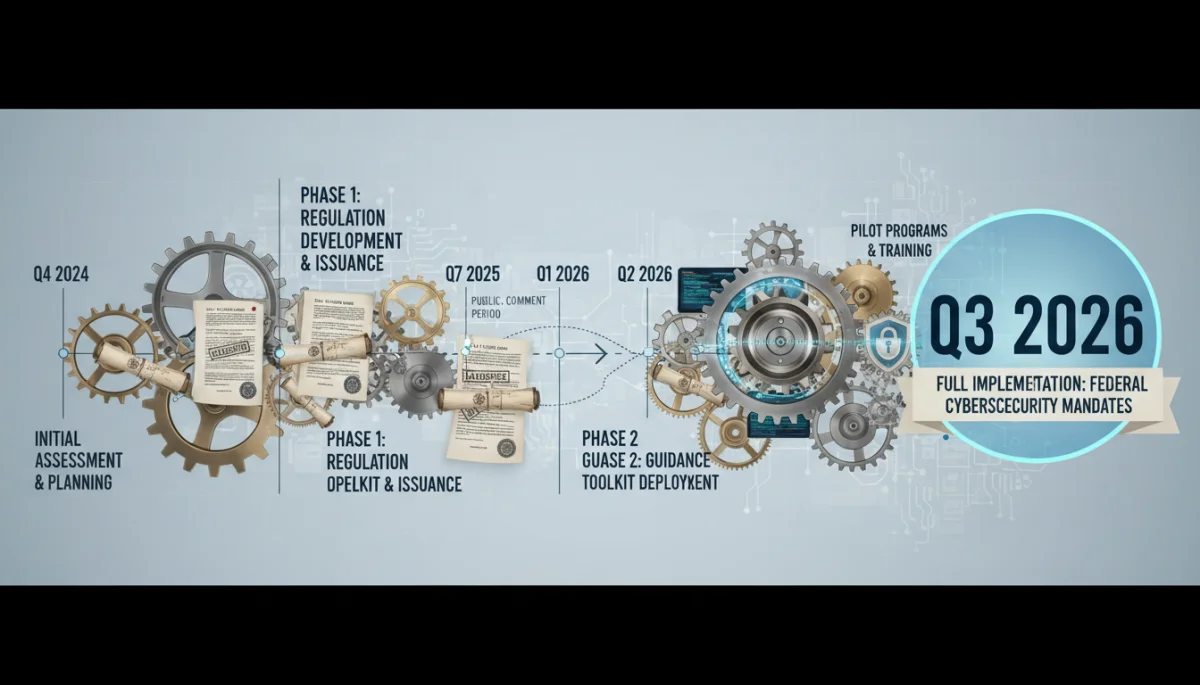
Meeting the Q3 2026 deadline for these federal cybersecurity mandates requires meticulous planning and execution. This isn’t a task that can be left until the last minute; it demands a phased approach with clear milestones. Businesses should already be in the assessment and planning stages to ensure they have ample time for implementation and validation.
The phased rollout ensures that organizations have a structured path to compliance. Early engagement with the requirements allows businesses to integrate changes seamlessly into their existing operations rather than undertaking a disruptive overhaul. Proactive engagement also provides an opportunity to identify and address unforeseen challenges.
Strategic Planning for Compliance
A robust compliance roadmap should include an initial assessment, policy development, technology implementation, employee training, and continuous monitoring. Each phase builds upon the last, creating a comprehensive security framework. Ignoring any step can jeopardize the entire compliance effort.
- Q4 2024 – Q1 2025: Initial Assessment & Gap Analysis: Understand current security posture and identify non-compliant areas.
- Q2 2025 – Q4 2025: Policy & Procedure Development: Draft and implement new security policies, incident response plans, and data handling protocols.
- Q1 2026 – Q2 2026: Technology Implementation & Training: Deploy necessary security tools, conduct employee awareness training, and run internal audits.
- Q3 2026: Final Review & Attestation: Complete external audits, obtain necessary certifications, and formally attest to compliance.
These milestones are general guidelines; specific deadlines may vary based on the applicable mandates and the size and complexity of the organization. However, the overarching message is clear: begin planning now to avoid a last-minute scramble that could compromise compliance and security.
Essential Cybersecurity Measures and Technologies
To achieve compliance with the new federal mandates, businesses must adopt a suite of essential cybersecurity measures and leverage appropriate technologies. These are not merely suggestions but foundational requirements designed to elevate the overall security posture and protect against prevalent threats. A multi-layered defense strategy is crucial.
Focusing on a holistic approach means addressing vulnerabilities at every level of the organization, from network infrastructure to individual user practices. The mandates emphasize not just preventing breaches but also detecting them quickly and responding effectively when they occur. This requires a combination of robust technical controls and well-defined operational procedures.
Core Security Implementations
Implementing these measures often involves significant investment in both technology and human capital. However, the cost of non-compliance or a major cyber incident far outweighs these upfront expenses. Prioritizing these areas will provide the strongest defense.
- Multi-Factor Authentication (MFA): Mandating MFA for all access to sensitive systems and data to prevent unauthorized access.
- Endpoint Detection and Response (EDR): Deploying advanced EDR solutions to monitor, detect, and respond to threats on endpoints.
- Regular Vulnerability Assessments and Penetration Testing: Routinely identifying and patching security weaknesses in systems and applications.
- Data Encryption: Implementing encryption for data at rest and in transit, especially for sensitive information.
- Incident Response Plan: Developing and regularly testing a comprehensive plan for detecting, responding to, and recovering from cyber incidents.
Beyond these technical controls, strong security awareness training for employees is non-negotiable. Human error remains a leading cause of security breaches, and an informed workforce is the first line of defense. Continuous monitoring and regular audits will also be vital to maintain compliance over time.
Navigating the Compliance Journey: Challenges and Best Practices
The journey towards compliance with new federal cybersecurity mandates is not without its challenges. Businesses may face hurdles such as budget constraints, lack of specialized cybersecurity talent, and the complexity of integrating new security measures with existing IT infrastructure. Recognizing these potential obstacles early is key to developing effective mitigation strategies.
Overcoming these challenges requires a strategic and adaptable approach. It’s not about achieving perfect security overnight but about continuous improvement and a commitment to fostering a strong security culture. Collaboration with external experts can often bridge internal knowledge gaps and accelerate the compliance process.
Effective Strategies for Compliance
Adopting best practices can streamline the compliance journey and ensure that efforts are both efficient and effective. These strategies focus on proactive measures, robust documentation, and a culture of continuous security improvement. They are designed to make compliance an ongoing process, not a one-time event.
- Start Early: Begin assessing and planning immediately to avoid rushed implementations and potential oversights.
- Engage Leadership: Secure buy-in from senior management to ensure adequate resources and organizational support.
- Document Everything: Maintain thorough records of all security policies, procedures, risk assessments, and incident responses.
- Leverage Frameworks: Utilize established cybersecurity frameworks like NIST CSF or ISO 27001 as guides for implementation.
- Continuous Monitoring and Auditing: Implement systems for ongoing security monitoring and conduct regular internal and external audits to verify compliance.
By embracing these best practices, businesses can transform the daunting task of compliance into an opportunity to enhance their overall security posture, build trust with stakeholders, and protect their valuable assets from evolving cyber threats. It’s an investment in resilience and long-term viability.
The Implications of Non-Compliance and Future Outlook
Failing to meet the new federal cybersecurity mandates by Q3 2026 carries significant repercussions for US businesses. These are not merely theoretical risks; they are tangible threats to an organization’s financial health, legal standing, and public image. Understanding the full scope of these implications should underscore the urgency of compliance.
Beyond immediate penalties, sustained non-compliance can lead to exclusion from federal contracts, loss of critical business partnerships, and a severe erosion of customer trust. In an era where data breaches are front-page news, a reputation for lax security can be devastating and difficult to recover from. The long-term consequences can far outweigh initial fines.
Potential Penalties and Risks
The penalties for non-compliance are designed to be a strong deterrent, reflecting the gravity of the cybersecurity threat. These can range from substantial monetary fines to legal action and operational restrictions. Businesses must weigh these risks against the cost of implementing robust security measures.
- Financial Penalties: Significant fines levied by federal agencies, potentially reaching millions of dollars depending on the severity and nature of the non-compliance.
- Legal Action: Increased risk of lawsuits from affected parties, including customers, partners, and shareholders, following a data breach or security incident.
- Loss of Federal Contracts: Ineligibility for lucrative federal contracts and grants, impacting revenue streams for many businesses.
- Reputational Damage: Severe harm to brand image and customer trust, leading to loss of business and market share.
- Operational Disruptions: Potential for government-mandated operational halts or restrictions until compliance is achieved.
Looking ahead, these mandates are likely just the beginning. The federal government will continue to adapt its cybersecurity requirements as threats evolve. Businesses that build a strong foundation now will be better positioned to navigate future regulatory changes and maintain a resilient security posture. Proactive security is the new standard.
| Key Point | Brief Description |
|---|---|
| Compliance Deadline | US businesses must implement new federal cybersecurity mandates by Q3 2026. |
| Affected Businesses | Includes federal contractors, critical infrastructure, and their supply chain partners. |
| Key Measures | MFA, EDR, regular vulnerability assessments, data encryption, and incident response plans. |
| Non-Compliance Risks | Financial penalties, legal action, loss of contracts, and significant reputational damage. |
Frequently Asked Questions About Federal Cybersecurity Mandates
Primarily, federal contractors, organizations managing critical infrastructure, and businesses handling sensitive government data are affected. This often extends to their subcontractors and supply chain partners, broadening the scope significantly across various sectors.
The primary deadline for US businesses to implement these new federal cybersecurity mandates and achieve compliance is the third quarter of 2026 (Q3 2026). Proactive planning and phased implementation are highly recommended.
Key measures include implementing Multi-Factor Authentication (MFA), deploying Endpoint Detection and Response (EDR) solutions, conducting regular vulnerability assessments, encrypting sensitive data, and developing a robust incident response plan.
Non-compliance can lead to severe financial penalties, legal action, loss of eligibility for federal contracts, significant reputational damage, and potential operational disruptions. It’s crucial to prioritize adherence to these regulations.
Businesses should start with a comprehensive gap analysis, develop a detailed compliance roadmap, secure leadership buy-in, thoroughly document all security processes, and engage in continuous monitoring and auditing to maintain compliance.
Conclusion
The new federal cybersecurity mandates represent a pivotal moment for US businesses. The Q3 2026 deadline is not merely a date on a calendar but a critical benchmark for ensuring national digital resilience and protecting proprietary and personal data. Proactive engagement, strategic investment in robust security measures, and a commitment to continuous improvement are indispensable. Businesses that embrace these changes will not only achieve compliance but also fortify their defenses against an ever-growing array of cyber threats, securing their operations and reputation for the long term.
